Flat and butterfly roofs, no duct cavity
The signature midcentury rooflines leave nowhere to hide ductwork. Ductless multi-zone systems cool and heat without soffits or drop ceilings — and we route line sets so the architecture still reads clean.

Midcentury tracts with butterfly roofs and no attics in South UC; HOA-governed condo towers in UTC.
Yes — University City is core territory for us, and it's really two neighborhoods in one. South UC's early-1960s tracts (including homes by midcentury designers Palmer & Krisel) were built with flat or butterfly roofs, little to no attic, no central AC, and 60-100A electrical panels. UTC's newer condo towers trade those problems for HOA rules and tight mechanical closets. We retrofit both — and we show you photos of exactly what your building allows before quoting.
Why neighbors call us
South UC was subdivided in 1960 as a community for the new UCSD campus, and its first tracts went up fast in 1960-62 — single-story post-and-beam homes with clerestory windows, open plans, and the flat or butterfly rooflines that define Desert Modernism. Beautiful; also duct-hostile. With no attic cavity, a conventional ducted retrofit means drop ceilings or exposed runs that fight the architecture. Ductless mini-splits are the neighborhood's natural fit: one compact head per zone, line sets routed to respect the clean facade lines, full heating and cooling from a single outdoor unit.
The electrical story matters just as much. Early-60s panels here were commonly 60-100A, and a modern heat pump wants a dedicated 30-50A circuit — so panel capacity is part of every honest quote we write in South UC. Climate-wise, this is marine-layer country: summer highs average the mid-to-upper 70s, which means right-sized, quiet, efficient equipment beats big tonnage every time. In the UTC towers, we work within HOA architectural review, mechanical closet dimensions, and building envelope rules — the paperwork is ours to handle.
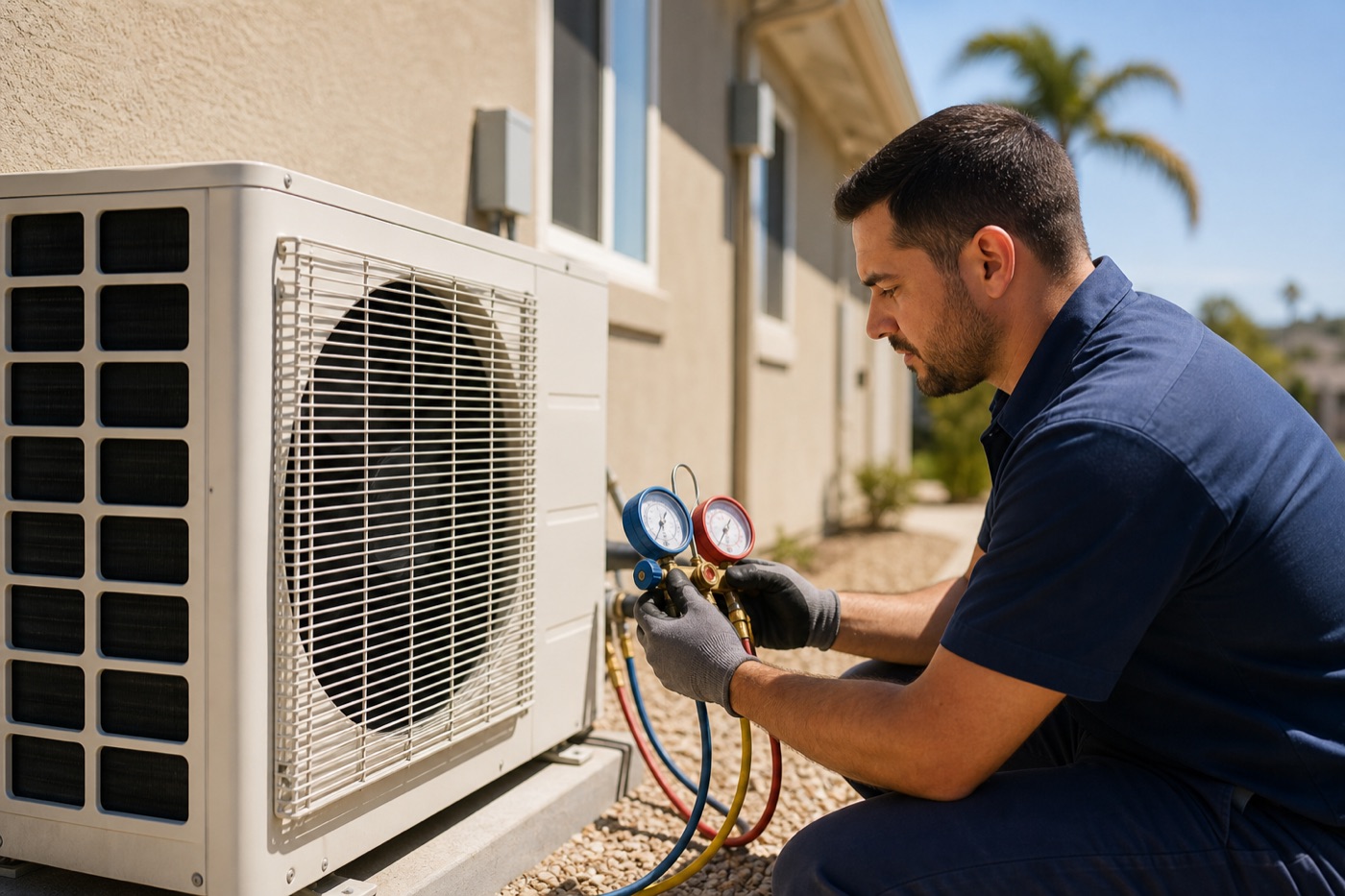
The signature midcentury rooflines leave nowhere to hide ductwork. Ductless multi-zone systems cool and heat without soffits or drop ceilings — and we route line sets so the architecture still reads clean.
Original services overload fast when you add modern equipment. We evaluate the panel during the diagnostic and fold any upgrade into the plan upfront, coordinated with SDG&E where service changes are needed.
HOA review, sealed envelopes, and closet-sized mechanical spaces limit what fits. We measure, check the CC&Rs, and quote equipment the building will actually approve.
Honest answer, verified July 2026: less than the ads imply — and anyone quoting you expired programs deserves a second opinion. The federal 25C tax credit is gone for equipment placed in service after December 31, 2025. California's HEEHRA electrification rebates (up to $8,000 for income-qualified households) are fully reserved statewide for single-family homes as of February 24, 2026 — new applications go to a waitlist, per techcleanca.com. TECH Clean California's market-rate single-family heat pump incentives are fully reserved too.
What IS still real: SDG&E's Residential Energy Solutions program offers no-cost AC tune-ups, smart fan controllers, and a refrigerant-charge check for single-family homes (renters included), per sdge.com. The San Diego Regional Energy Network (sdren.org) provides a free home energy advisor who helps you find and stack whatever funding applies to your home. The City of San Diego's HEART electrification rebate phases ran only through February 2026. And with SDG&E charging some of the highest residential electric rates in the nation, the heat-pump-vs-gas-furnace math has to be run honestly for YOUR home — panel capacity, duct condition, and insulation included. That's exactly the diagnostic-first work we photograph and show you before you spend a dollar.
Program statuses verified July 2026 on techcleanca.com, sdge.com, sdren.org, and sandiego.gov. If a program reopens, we'll tell you — and if a salesperson promises you a rebate we can't verify on the program's own site, that's a red flag.
Standard City of San Diego rules apply: mechanical permit, Title 24 third-party verification, setbacks and screening for at-grade equipment. Worth knowing: the early Palmer & Krisel-era homes are now past the City's 45-year threshold, so significant exterior alterations can trigger potential historic review — one more reason concealed, minimal-impact installs are the right default here. In UTC, the HOA's architectural process comes first; we prepare the submittal so approval isn't your homework.
Yes — that's the point of ductless done well. No soffits, no dropped ceilings, one small penetration per zone, line sets routed and covered to disappear against the facade. The architecture stays midcentury; the comfort becomes modern.
Because most early-60s UC homes still run 60-100A services, and a heat pump needs its own 30-50A circuit. An honest quote settles panel capacity upfront — we assess it during the diagnostic so there are no surprises.
Usually yes, within rules: HOA architectural approval, envelope and balcony restrictions, and equipment that fits the mechanical closet. We check your building's requirements first and quote only what will be approved.
Less than inland — the marine layer holds most summer days in the 70s. Right-sizing matters more than tonnage: variable-speed equipment runs quieter, dehumidifies better, and costs meaningfully less on SDG&E's rates.
Verified July 2026: the federal 25C credit is expired and HEEHRA single-family rebates are waitlisted statewide. SDG&E's Residential Energy Solutions offers no-cost tune-up services, and the free SDREN advisor helps you catch programs when they reopen. We quote today's truth, not last year's flyer.
Nearby neighborhood guides
One call brings a Progressive Heating & Air technician who photographs exactly what your University City home needs — before you spend a dollar.
Open 24/7 · Bryant Factory Authorized Dealer · Free estimates on new systems